Iteration Triage (playtest feedback into measured fixes)
/iteration-triage
A GameSkill original for the round after a game's first playable version: every thing a player said becomes one item classed as gameplay, ui, feel or bug, with a quote, a reason, a change limited to that class's tune keys and a measurable check. tools/triage.mjs lints the round, applies it, measures every metric before and after, proves each change is needed and fails on regressions a fix caused elsewhere. Ships Tidepool Hop, an original one-level platformer with six metrics and a bot, tested in Node and headless Chrome.
- License
- MIT
- By
- By GameSkill
Tested by GameSkill
28/28 checks passed on Node 22 + Canvas 2D in headless Chrome (2026-11-09): trigger, a runnable example, a screenshot and self-check, one job per skill, and English + Chinese docs. Trigger checks match prompts against skill descriptions; they are not a live agent run.
Test reportGameSkill's tested copy
Written and tested by GameSkill for gameskill.dev. The ZIP holds the whole skill: SKILL.md and its Chinese version, scripts, a runnable example, tests, the self-check list and our test report.
A GameSkill original, released under MIT. The ZIP keeps LICENSE and CREDITS.md, which lists the workflow inspiration, the CC0 test assets and the third-party libraries with their licenses.
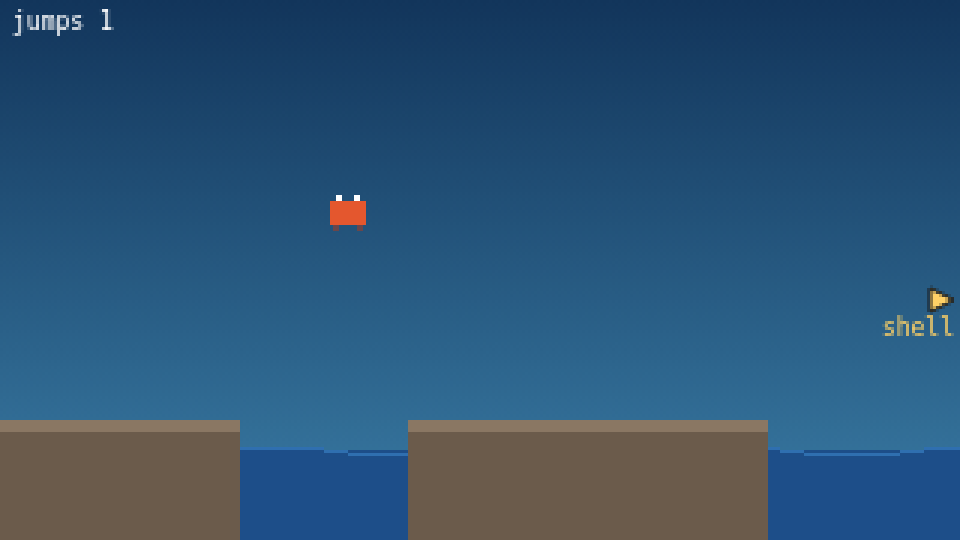
Self-check
- 每条都有玩家原话(或回退来源)和一个类别 / Every item quotes the player (or names the regression) and has one class
- triage.mjs --strict 通过:0 lint 错误、没有回退 / triage.mjs --strict passes: no lint errors, no regressions
- 每个改动都是必要的:去掉它检查就不通过 / Each change is needed: its check fails without it
- 改完之后又请人玩了一次 / Players tried the new build before the next round
Install
Tell your AI
Install the skill from https://gameskill.dev/skills/iteration-triage/install.md
GameSkill's tested copy
mkdir -p .claude/skills
curl -fsSL https://gameskill.dev/dl/skills/iteration-triage.zip -o /tmp/gameskill-iteration-triage.zip
unzip -oq /tmp/gameskill-iteration-triage.zip -d .claude/skills
rm /tmp/gameskill-iteration-triage.zip
What you get
- A table for sorting feedback into gameplay, ui, feel and bug, with the question that decides it
- triage.js and tools/triage.mjs: lint, apply, before/after for every metric, a needed-change test, regressions, a markdown table and the new tune
- Tidepool Hop: an original one-level platformer with a pure sim, six metrics and a bot
- Three example rounds: a draft that regresses, the fixed round, and one with planted mistakes
- 16 checks in test/run_tests.mjs, including the round applied in headless Chrome
Good fit
- The second and later versions of a game made with a coding agent
- Feedback like 'floaty', 'I didn't know where to go', 'this jump is impossible'
- Making sure a fix for one complaint does not break another part
Not for
- Building the first version: use one-sentence-to-game or a mechanic skill
- Genre feel recipes on their own: see the feel skills
- Bug tracking across a team
Try this prompt
Here is the playtest feedback on my platformer's first build. Sort it, pick up to three fixes, change only the right numbers, and prove nothing else broke.About this skill
A GameSkill original for the round after the first playable build. Feedback arrives mixed. Fixing it all at once hides which change did what, and a fix for one complaint can quietly break something else. Here each round is small, sorted and measured: every item is one quote, one class, one change within that class's tune keys and one check, and the tool fails the round on any regression.
Agent steps
- Collect what players said, word for word, and give the game metrics with good ranges and per-class tune areas.
- Write a round of up to three items, each with said, class, why, change and check.
- Run triage.mjs until it passes in strict mode: each check passes, fails without its own change, and no metric regressed. Then ship the tune and play again.
Common problems it solves
- Vague "make it better" changes that touch several systems at once.
- Feel complaints answered with level edits, or the other way round.
- Fixes that break another part (a snappier jump that makes a gap impossible), and checks that prove nothing.
Credits
The idea of splitting post-first-version iteration into gameplay, UI and feel comes from a post on X by @Haosen9527 (idea only; no code or text was used). Tidepool Hop, the tools and the text are ours.
Requirements
- Node 22+ for tools/triage.mjs (standard library only)
- A game whose rules can run without a screen, so metrics can measure a tune
- Chrome or Chromium for the self-test
Topics
FAQ
Game Polish Workflow
A repeatable workflow for getting an AI agent to actually improve your game: a 10-step polish loop, bilingual prompts, a troubleshooting guide for common AI-made game bugs, and playtest and release checklists.
Based on Iterating after the first version: gameplay, UI and feel (post, idea only) by @Haosen9527 (no licence, idea only, no code or text used). Ideas only: GameSkill wrote the code and text; CREDITS.md in the ZIP lists every source.
Works well with
Skills the author points to as related or as the better fit for neighbouring tasks.
Mechanic Picker (choose 2-3 mechanics that need each other, one page, bot playtest)
A GameSkill original for the step before building: pick two or three game mechanics that work together from 24 cards, scored against your input, day budget and wanted feel, write them on one checked page with a playtest question each, and prove the pair makes a game with a quick bot playtest. Worked example: Lantern Ferry, whose first numbers the bots caught as a one-strategy game.
One Sentence to Game (prompt, iterate, check)
A GameSkill original for any model: a round-1 prompt that turns one sentence into a small finished browser game, a one-change-per-round loop with a creation log, a reusable spec template, and a headless checker that reports console errors, blank frames and dead controls as PASS or FAIL. It does not promise one-shot.
Three.js FPS Weapon Feel (recoil, ADS, touch aim)
A GameSkill original: a learnable recoil pattern whose recovery never undoes the player's own compensation, aim-down-sights with matched sensitivity, spread you can draw as a crosshair, viewmodel bob, sway, kick and flash, and a phone chapter with a move stick, precision look zone and a fire button that aims.
Similar skills
Novel to Game
Agent skills for source-grounded adaptation of novels into games: cited design docs, target-runtime builds and evidence-based QA.
open-game-skills
An MIT pack of about 190 SKILL.md agent skills for game design: combat feel, camera, traversal, world, validation, 2D/Spine and art pipeline, with a dispatcher and adapters for Three.js, PixiJS, Phaser, Cocos, Godot, Unity and Unreal.
De-AI Game UI (remove the generic AI look from menus and HUDs, checked by a lint)
A GameSkill original that strips the tells of AI-made game UI (purple-blue gradients, glass panels, neon glows, emoji icons, one big radius, everything centred, identical buttons, epic-journey copy) and rebuilds the screen from the game's own world. Ships a 12-rule lint that reads computed styles in headless Chrome for any framework, a before/after pause menu and a mutation test proving every rule can fail.
Pixel Diorama Game (tiny isometric pixel games with seamless ambience)
A GameSkill original for making a small browser game as an isometric pixel diorama: one place floating on white, a fixed 30-degree camera, a 360x280 canvas scaled by whole pixels, hue-shifted shading, long hard shadows and one physical action, plus rain, ripples, smoke, embers and lamp flicker drawn by code in loops that wrap without a seam. Ships the Pixel Plays renderer (MIT), our ambience kit and a tested example game.